
Microbial transmission in captivity
Captive animals experience dramatically different environments and much greater exposure to humans than their free-living counterparts. These changes are often accompanied by substantial restructuring of their gut microbiomes, including shifts toward more human-associated community states. However, the mechanisms underlying this “humanization” remain unresolved.
What causes microbiome “humanization” in captivity?
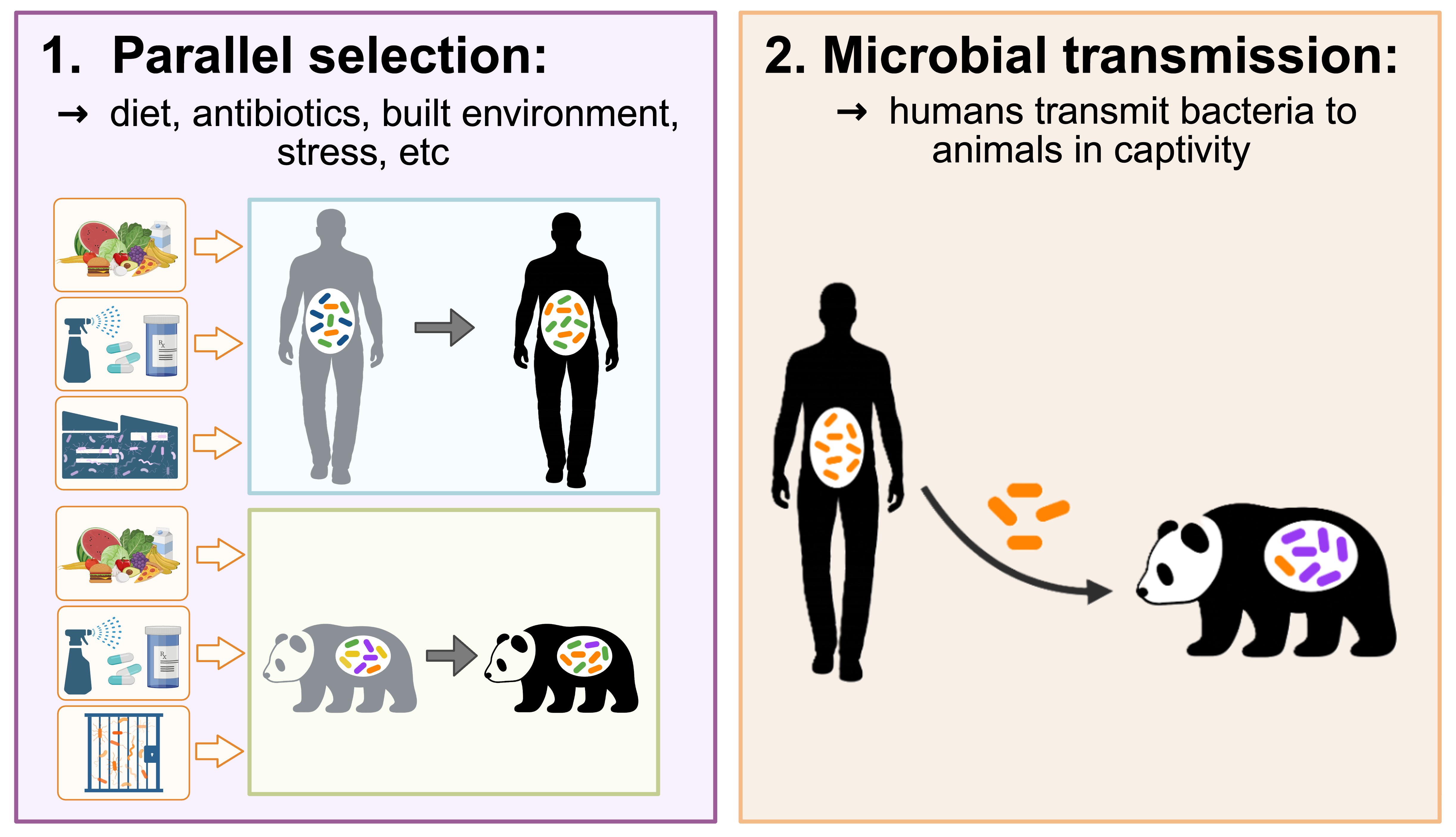
Figure 1. Two non-mutually exclusive mechanisms may contribute to microbiome humanization in captivity: parallel ecological selection and transmission of human-associated bacteria. Created in BioRender.
My research examines whether microbiome restructuring in captivity primarily reflects shared ecological pressures or the transmission of human-associated bacteria into animal microbiomes. Using comparative and strain-resolved metagenomic approaches, I study how captivity reshapes host-associated microbial communities across mammalian hosts.
More broadly, this work asks what microbial exchange in human-dominated environments may mean for animal health, conservation, and One Health. A central goal is to understand when changes to wildlife microbiomes are transient, persistent, beneficial, or potentially harmful.
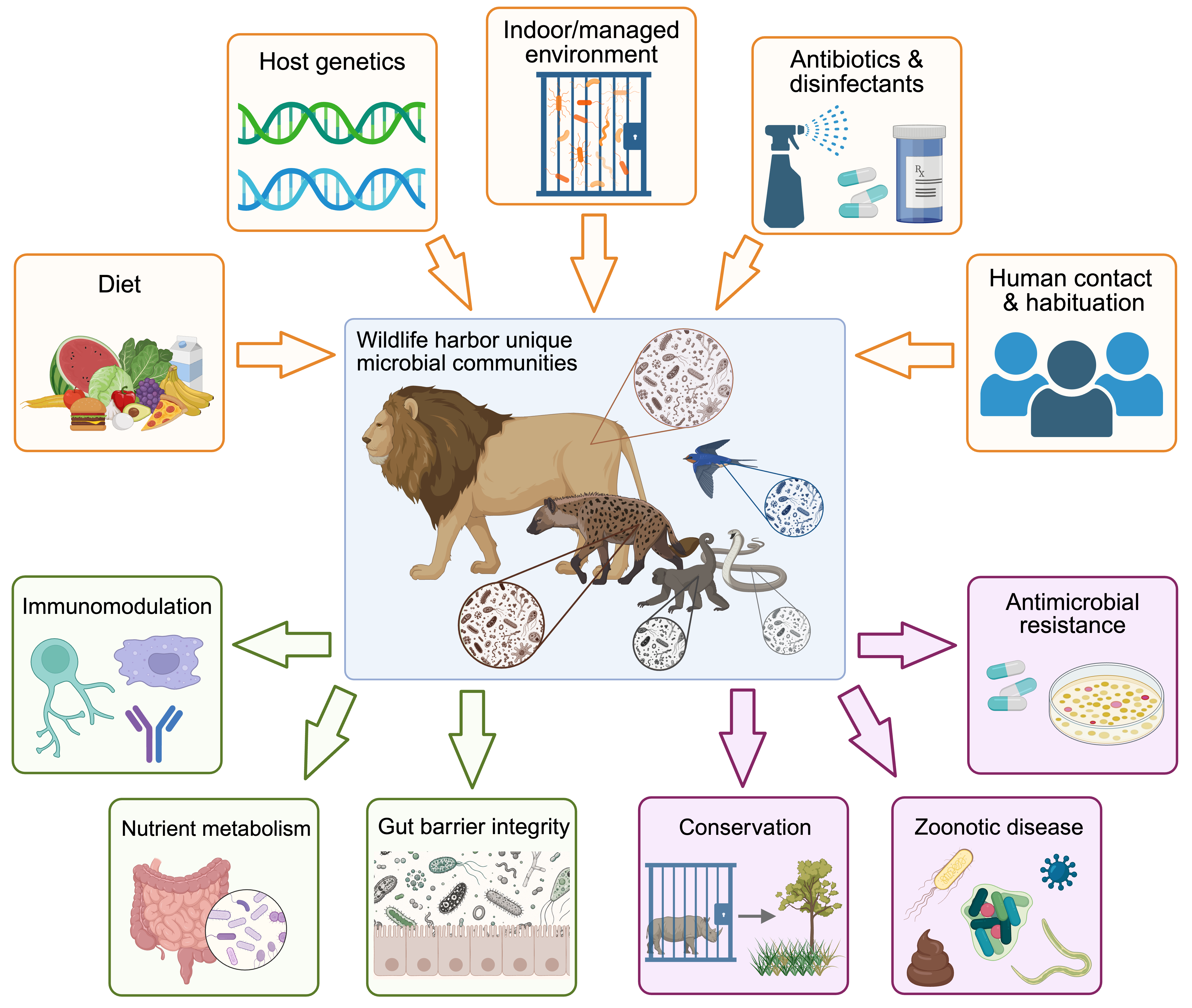
Figure 2. Factors shaping wildlife microbiomes in captivity are shown in orange; potential consequences for host health are shown in green; and broader One Health and conservation implications—including antimicrobial resistance and zoonotic disease risk—are shown in purple. Adapted from Lagerstrom et al. (2023). Created in BioRender.
This research is ongoing.